Showing posts with label Canon 5D MkII. Show all posts

Sunday, 13 March 2011

Memory cards for Canon 5D/7D shoots


For Canon 5D or 7D shoots, for ad films, music videos, promos, or features, people go into long discussions and arguments about disk storage, RAID etc etc. I have always advocated getting as many memory cards as you plan on shooting. And not erasing and reusing any card, till the shoot is over. Even after transferring the card contents to hard disk for editing and post-production.
That way, one has the data available all the time on the original cards, even if any hard disks fail.

But people tell me that this costs quite a lot. I decided to find out.

First, let's see what media would cost before HDSLRs happened to film-making.

400 feet of film costs about Rs 10,000, and runs about 4 mins, so film is Rs 2500 per minute.
With a shoot ratio of 1:10, a standard Hindi film of 150 mins would shoot 1500 mins of film. This amounts to about 340 rolls of 35mm film or Rs 34 lakhs in film costs alone. Processing extra.

A 40 min HDCam SR tape is about Rs 10,000. So for the same 150 min feature, even at a shoot ration of 1:20 (people tend to shoot more with tape than film). One would use 75 tapes of Rs 7.5 lakhs on tape. And one doesn't erase and reuse tapes even after they are transferred to the edit system.

Now, on to HDSLRs (Canon 5D or 7D)

On a Canon 5D or 7D CF cards are used up at about 3 min per Gb. So, if one shot an entire feature of 150 mins, even at a shooting ratio of 1:30, and shot on 8 GB CF cards, one would use up about 190 CF cards.
        
At jjmehta.com online store, 
http://www.jjmehta.com/webshop/index.html?target=dept_19.html&lang=en-us
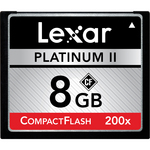
an 8 GB CF Ultra 200x card sells for Rs 2000. So, if one did not reuse cards, and shot to about 200 cards or 'exposed' 80 hours of video on a Canon 5D/7D, one would spend Rs 4 lakhs.

Rs 34 lakhs for 25 hrs of film, or
Rs 7.5 lakhs for 50 hrs of HD tape, or 
Rs 4 lakhs for 80 hrs of Canon HD video. 


I think its clear CF cards, as a medium, are way cheaper than HD tape or film. And if one does not erase and use the costlier film or HD tape, what reason is there to erase CF cards that cost 1/30th what film costs.

Come to think of it, if you shot with a Canon exactly like film at a shoot ratio of 1:10, you would need only about 63 cards or spend about Rs 1.25 lakhs on 'rawstock'.

So, I don't get the reason for reusing CF cards. Reuse them after the film is released and you've consolidated all your media, but please, stop shooting an entire feature with 2 CF cards erased and used 30-100 times over.

Thursday, 1 July 2010

Zacuto Great Camera Shootout 2010 - Film vs HD-DSLR

If you've been to the CAS presentation in Mumbai last weekend, and are wondering how HD-DSLRs would fare in tests like these, please check out the Zacuto tests. This was Film - Kodak and Fuji - stocks exposing the same scenes as six top DSLRs that shoot HD video 5D MKII, 7D, 1D, 550D/T2i Rebel, Nikon D3s, Panasonic GH1.
 
Results of the tests, the Zacuto Great Camera Shootout 2010 - Film vs HD-DSLR are as below...

Zacuto Great Camera Shootout 2010: It's all About Latitude

Zacuto Great Camera Shootout 2010 Webisode 2: How Sensitive Can You Get?

The Great Camera Shootout 2010 Web 3: The Revolution Begins...

If you are a member, you can download these.
 
For those who don't yet know about the HD-DSLR phenomenon, its about still cameras that shoot video at HD resolution. Some love it, some gloss over the defects, most just get on with the job of taking great pictures.

Collectively, an estimated 200,000+ still cameras that can do HD video may have been sold so far.

Sunday, 1 November 2009

Video DSLRs - how good are they really

The original intent of the Canon 5d MkII was not to be a video camera, nor challenge any existing video cameras. It was made to fulfill a specific need of reporters from Reuters who could shoot pro quality stills with the occasional video.

The video format of the Canon 5D MkII was made as 30 fps not 29.97 fps with that specific intention.  Reuters reporters were expected to create video for the web with this device. Web can work with 30fps every bit as well as 29.97 fps.

The form factor of the camera is friendly for still photographers so they could concentrate on shooting stills rather than learn a whole new alien interface as well as method of using a camera. Still photographers simply wouldn't have been able to easily adjust to a shoulder mount camera. On the other hand, holding a camera at arm's length and looking at an LCD screen is not very new to them.

What Canon did not estimate is how well the video fraternity took this camera up. They have sold nearly 50,000 5dMkII models and maybe about half as many 7Ds. And now there's the 1D MkIV. Together, through 2010 Canon could easily move probably a 100,000 pieces.

There is probably no video camera, and definitely no pro HD or higher resolution camera that can ever hope to sell these numbers. Even the Red, arguably the post popular pro digital movie camera so far, has sold not too many over 5000.

One of the benefits of making a still camera that shoots video, rather than a video camera that shoots stills, is that still shooters who use the SLR form factor are generally good photographers. They have a strong sense of composition and pictorial language.

They often also make a living out of taking pictures. Hence, by and large, videos from these vDSLRs seem to be pretty decent looking compared to the shaky, zoomy, swimmy videos most amateurs dish out of handycam type video cameras.

Vimeo, Flickr, smugmug, Exposure Room are full of some really great video from vDSLRs. Perya, Dublin's People, Nocturne, are just some examples.

Granted, they may be unsuitable for broadcast, but there is a huge, not-recession-ridden market of wedding video, corporate video, and internet video that can benefit from vDSLRs.

Sunday, 28 September 2008

Canon EOS 5D MkII

Some musings on this trend of still cameras doing high quality high res video.


Canon announced and will ship very soon, a new DSLR. The EOS 5D MkII. This is a DSLR like many before it. It has many more megapixels that the cameras before it. It does higher ISO that cameras before it. Which is normal too.

But what sets it apart is that it can shoot movies at high resolution as well. In fact it can shoot 25fps (maybe even 24fps and 30fps) movies at 1920x1080 pixels. Which is the definition of HD. And which is sufficient for making a film. Even if finally for 35mm movie film.

But Canon was not the first camera maker to make such a camera. Nikon recently released the D90 which too can do HD movies. But 1280x720. And the Nikon uses (old) M-JPEG compression. Compared to H.264 that Canon uses. There's also another model that can do HD movies. The Canon SX1 IS too does HD movies and also at H.264.


Many web sites have described these machines. Some have downloadable results from these cameras. Some have compared the EOS 5D MkII to the Red One and even to the unreleased Red Scarlet. And some have even called this a 'game changer'.

I think this is a bit over the top. The EOS 5D MkII is basically a still camera. And as good as a camera Canon makes. That it can do HD movies is an additional functionality. But it can't challenge a camera made for doing movies.

Some of the limitations of shooting a proper movie with the EOX 5D Mk II as with any other such still camera is lack of some crucial features.

Like.
1. You can't adjust focus while 'rolling'.
2. You can't adjust aperture while 'rolling'.
3. It has a still camera grip which isn't exactly comfortable for filming.
4. You can only shoot a few minutes at a time.
5. The movies are highly compressed H.264.
6. Sound may not be as good and there are no professional inputs.
7. The movies are 1080p30 even at Canon's UK site.

But to be fair, this is a rather economical HD camera. At $ 2700 the price can't be beat. Lenses are super sharp, still camera, 21 megapixel capable lenses, that can rival film camera lenses. Film camera lenses cost more not necessarily because they are better than still camera lenses. There is volume economics to it as well.

Which brings us to the interesting question - why did Nikon and Canon do it? That is, make a still camera that can do high quality movies. And why didn't they just come out with a digital movie camera like the Red, which shoots to hard disk or memory card? Sort of like a successor to the XL-H1?

I'm sure both companies have some good reasons, but one of them could be economics. I don't have exact figures, but at between $2000 to $3000, DSLRs probably sell more numbers than movie making cameras. So the cost of developing, and improving on the quality of, and marketing HD-size movie capable imaging chips - CCD or CMOS - gets spread over much larger numbers.

And, a large body of discerning eyes - still photographers - take stills and contribute with valuable feedback. So the product gets market tested well. Had this feature of shooting HD movies with a full frame chip been provided in a 'handycam type' camcorder, it would have been wasted in shaky vacation movies.

So while I'm not sure about Nikon, but I'm reasonably certain Canon will release a HD or even maybe 4k resolution camera that shoots movies using a imaging chip that's the exact size of the normal 35 mm movie frame. The EOS 5D MKII is just the beginning.

And when that happens, that will be a 'game changer'.

Added 27 Oct 08
Amongst the first movies shot with the EOS 5D MkII which was put up on the net, was taken down as it lead to some really heavy downloading that swamped the host site. The movie is now up at Vincent's blog here.